Matcha Sourcing
Why China’s Hidden-Gem Matcha Suppliers Are Hard to Find on LinkedIn
China has substantial matcha manufacturing capability, but an overseas buyer’s LinkedIn search reveals only part of it. A fact-checked supplier landscape and a better discovery method.
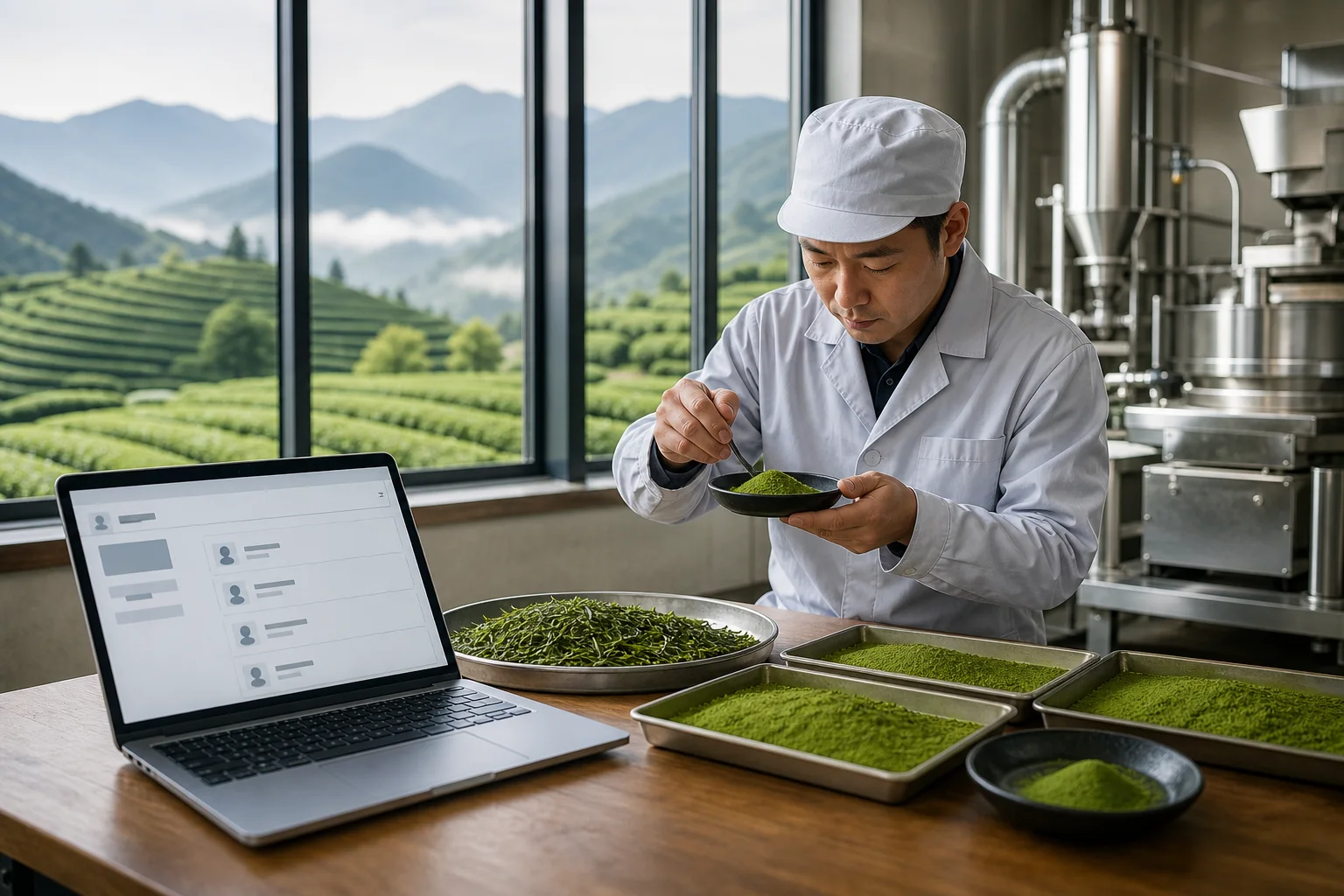
Editorial illustration. It represents the gap between physical manufacturing capability and online visibility; it does not depict a named company.
The short answer
Search “matcha supplier” on LinkedIn and the results can create a distorted market map.
You will find export agents, newly created trading brands and digitally fluent salespeople. Some are capable partners. But several established Chinese producers are much less visible under their legal company names, even when public records show years of processing experience, export activity or substantial production facilities.
There are important exceptions. Gui Tea now maintains a detailed English LinkedIn page, and Zhejiang Caiyunjian Tea has also built an identifiable presence. The accurate conclusion is therefore not that Chinese matcha companies are absent from LinkedIn.
It is this:
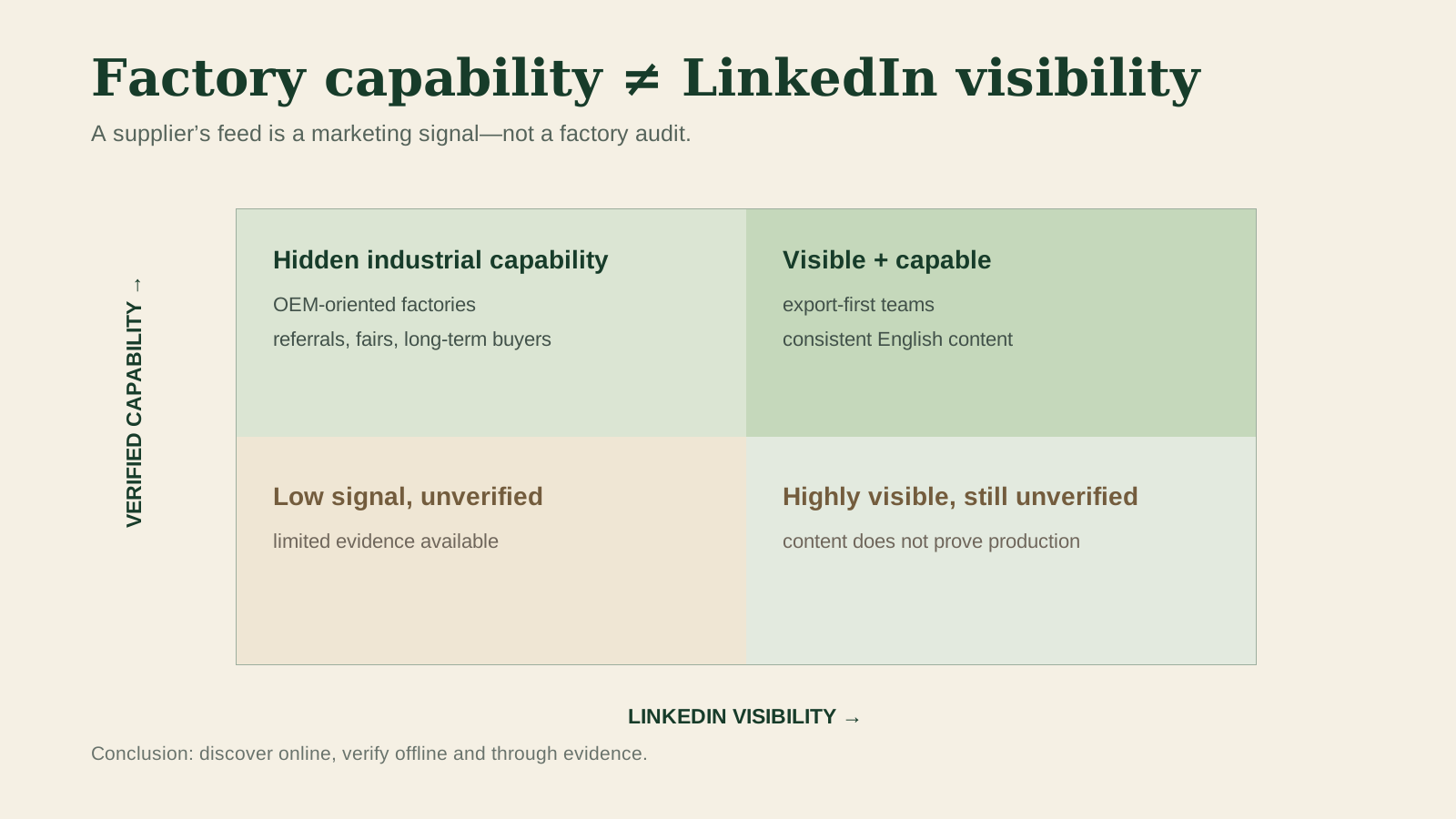
The Chinese matcha supply base is larger than the supplier universe an overseas buyer can see on LinkedIn—and online visibility is not a reliable proxy for factory capability.
Which Chinese matcha companies matter?
China does not publish a single real-time league table of matcha manufacturers. Capacity figures also differ in scope: some refer to powder, some to tencha or a production line, and some are company statements. The following is therefore a representative landscape, not a ranking, endorsement or complete supplier directory.
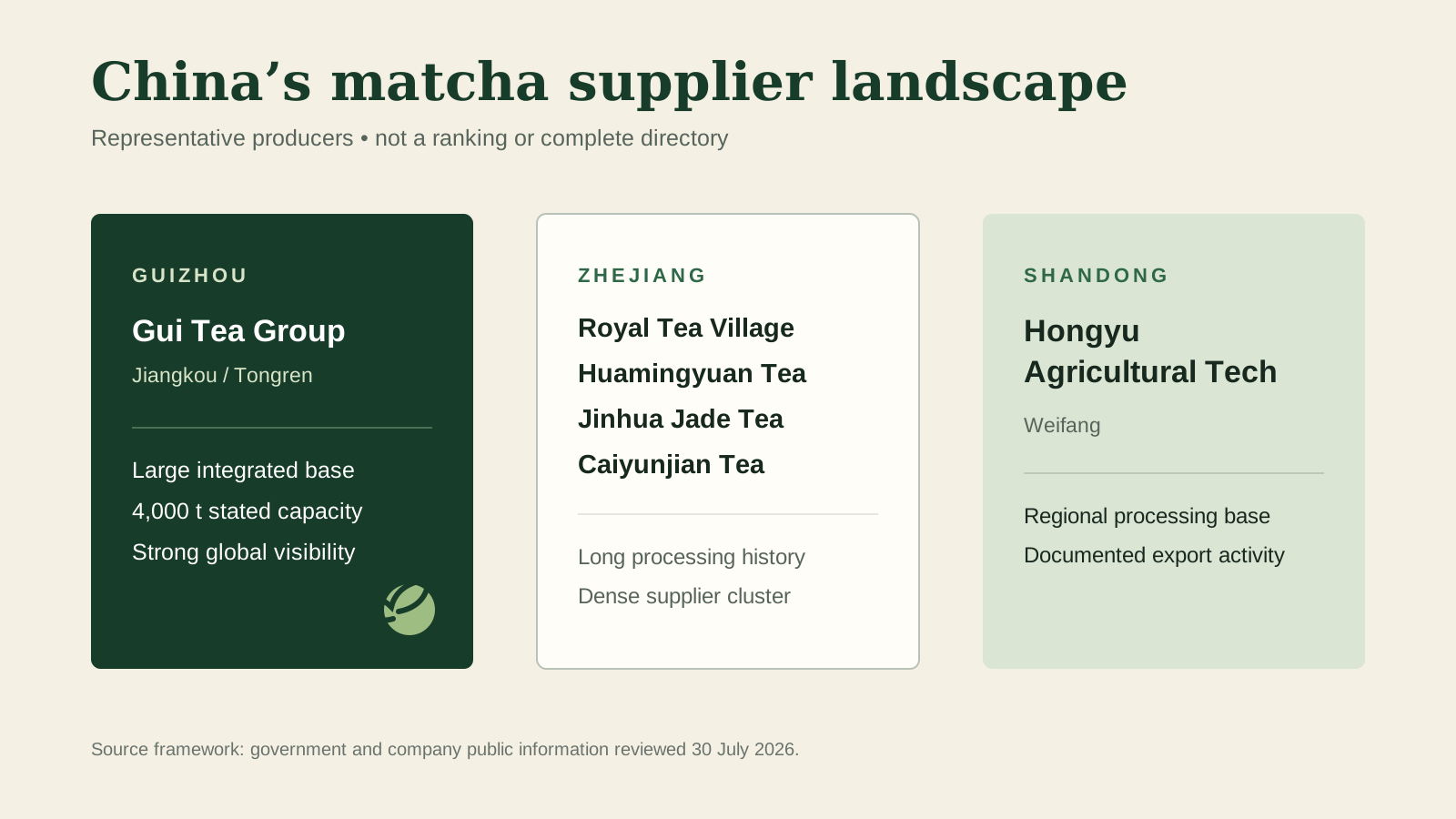
Guizhou Gui Tea Group
Gui Tea is the clearest large-scale example. Government reporting describes four modern matcha production lines and a large single-building refining facility in Jiangkou. A Tongren government report gives a stated annual matcha capacity of 4,000 tonnes, while another reports sales above 1,000 tonnes and exports to more than 40 countries and regions. See the Guizhou provincial introduction and Tongren government report.
Unlike many traditional factories, Gui Tea has become highly visible internationally. Its LinkedIn page demonstrates that the discovery gap is not permanent when a company invests in an English-speaking team and sustained content.
Shaoxing Royal Tea Village
Shaoxing Royal Tea Village Co., Ltd. is an older Zhejiang processor. Official local-history material records its establishment in 1993 as a Sino-Japanese tea venture, while Zhejiang reporting describes it as an early supplier of matcha to large food and restaurant companies. It continues to publish current enterprise standards for matcha products. See the Zhejiang local chronicle and its 2026 enterprise-standard filing.
Yet an exact-name public LinkedIn search does not surface a clearly maintained company page. Individual employee references appear, but the corporate identity is difficult to evaluate from LinkedIn alone.
Zhejiang Huamingyuan Tea
Zhejiang Huamingyuan Tea Co., Ltd. appears repeatedly in matcha-industry and processing records. A regional tea-industry planning document describes automated tea-processing lines and matcha output above 1,000 tonnes. See the industry plan.
The company name appears in third-party market posts on LinkedIn, but a strong exact-name corporate page is not readily discoverable in public search. A buyer may therefore encounter the company in a market report before finding a verified company-controlled profile.
Jinhua Jade Tea
Jinhua Jade Tea Co., Ltd. is described by Zhejiang’s tax authority as one of the earlier domestic companies focused on matcha ingredient processing. Zhejiang’s 2026 manufacturing-transformation project list includes a 600-tonne matcha line upgrade. See the Zhejiang tax authority profile and the provincial project list.
It has an English-facing website, but its legal company name is much less prominent in public LinkedIn results than its documented industrial history would suggest.
Shandong Hongyu Agricultural Technology
Hongyu represents a production base outside the best-known Zhejiang–Guizhou corridor. A 2025 report describes it as Shandong’s first matcha exporter, with products reaching Japan, Southeast Asia and the European Union, and notes cooperation with tea-research institutions. See the company profile reported by Shandong News.
Its exact corporate identity is nevertheless difficult to locate through an English LinkedIn search.
Zhejiang Caiyunjian Tea
Caiyunjian is a useful counterexample. Its company-controlled LinkedIn page states that it manages 800 hectares of tea gardens and has annual production capability of 2,000 tonnes. These figures should still be verified during procurement, but the company has made its proposition, location and contact path legible to overseas buyers.
A LinkedIn visibility check
The following observations were made through public exact-name searches on 30 July 2026. Search results and company pages can change.
| Representative producer | Public LinkedIn signal | What the signal does—and does not—show |
|---|---|---|
| Gui Tea | Strong company-controlled English page | Clear discovery and communication route; claims still require project-level verification |
| Caiyunjian Tea | Identifiable company page | An emerging export-facing presence; capacity figures are company statements |
| Royal Tea Village | Employee traces, no clearly maintained exact-name company page surfaced | Long industrial history is not reflected in an easily assessed corporate profile |
| Huamingyuan Tea | Mentioned in third-party market content | Market recognition is not the same as a verified, company-controlled page |
| Jinhua Jade Tea | English website, weak exact-name LinkedIn visibility | Search outside LinkedIn is necessary |
| Hongyu Agricultural Technology | Weak exact-name LinkedIn visibility | Regional reporting is more informative than the platform search |
Why does the gap exist?
1. The tea industry lacks enough multidisciplinary talent
Calling tea a simple “talent lowland” is too broad. China has strong agronomy, processing and sensory expertise. The shortage is more specific: people who can combine tea science, food-safety documentation, international B2B sales, English technical writing and digital content operations are uncommon, especially in production counties.
The China Tea Marketing Association’s decision to conduct a dedicated tea-industry talent-demand survey reflects an industry-wide need to understand and strengthen its professional workforce.
A good production manager does not automatically know how to build an English company page. A fluent English graduate does not automatically understand tencha, milling, pesticide-residue limits or batch release. The missing role is often the bridge between these two worlds.
2. Translation is not the same as international communication
Literal translation produces phrases such as “high mountain ecological clean tea” but may not answer a buyer’s real questions:
- Who is the legal manufacturer?
- Is the material tencha-based matcha or micronised green tea?
- Which grade fits latte, bakery or direct drinking?
- Which site and product are covered by the certificates?
- What are the pesticide, heavy-metal and microbiological limits?
- Can the sample specification be maintained at commercial volume?
International communication requires translating evidence, application and commercial boundaries, not only words.
3. The platform environment creates structural friction
LinkedIn discontinued its localized China service, InCareer, on 9 August 2023. LinkedIn accounts can continue to exist, but the platform is no longer a normal domestic business-development environment for many county-level tea companies. See LinkedIn’s official notice.
More broadly, operating a portfolio of overseas websites and social platforms from China adds account, access, security, payment and compliance friction. For a small or medium-sized factory, keeping a production line running usually wins over maintaining a weekly English content calendar.
4. Many factories grew through OEM relationships, not public branding
Some capable plants were built around Japanese orders, domestic ingredient buyers, trading companies, food manufacturers, exhibitions and referrals. Their business model rewarded production consistency and relationship continuity—not public thought leadership.
This also means that the company with the quietest LinkedIn page may be a genuine manufacturer, while the company with the best content may be a trader, brand owner or lead-generation business. Neither role is automatically good or bad; the role must be disclosed.
5. Company identities are fragmented across languages
The same business may appear under:
- a Chinese legal name;
- a pinyin or literal English translation;
- an export brand;
- a subsidiary or trading entity;
- an employee-created company entry with a spelling variation.
An exact English-name search can therefore miss the legal manufacturer even when employees or products are present on the platform.
What should an international buyer do instead?
Use LinkedIn as one discovery layer—not as the supplier database.
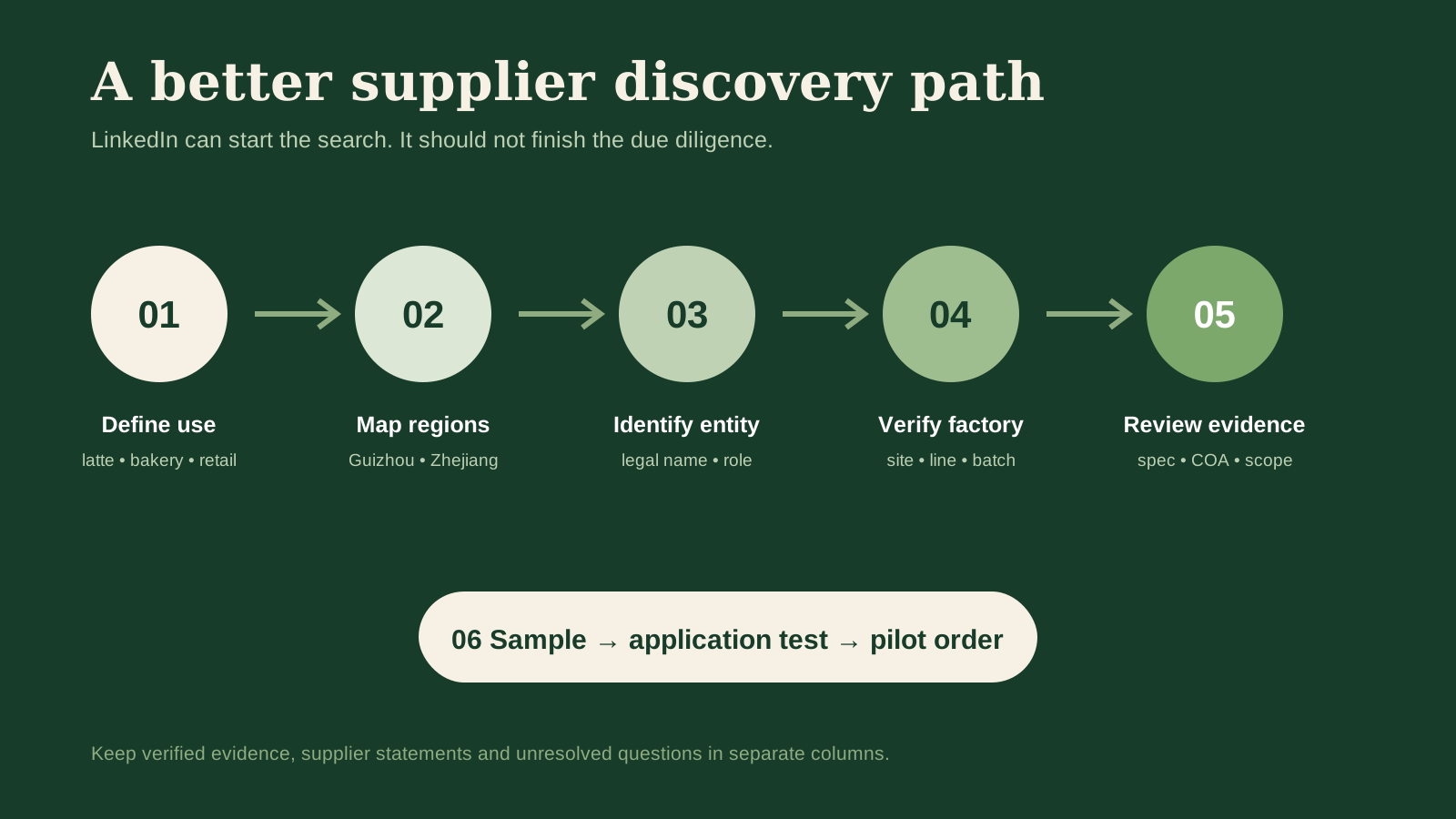
- Define the application first. A latte chain, bakery, dietary-supplement brand and ceremonial retail product require different matcha.
- Map production regions and clusters. Guizhou, Zhejiang and other emerging regions provide different histories, scales and supplier ecosystems.
- Search in Chinese and English. Use legal names, product terms, certification terms and regional keywords—not only “matcha supplier”.
- Identify the contracting entity and actual factory. Confirm who manufactures, exports, signs and receives payment.
- Review evidence by product and site. Specifications, process flow, certificates, COAs and audit scope must relate to the proposed material.
- Test the real application. Compare coded samples, request current batch evidence and use a pilot order before scaling.
The commercial opportunity
This visibility gap creates risk, but it also creates opportunity.
Overseas buyers who depend only on polished English profiles compete for the same visible suppliers. Buyers who can research Chinese records, communicate with factories and verify evidence can reach a wider field.
For Chinese producers, the lesson is equally clear: international visibility no longer requires pretending to be a consumer lifestyle brand. A verified legal identity, clear application grades, defensible specifications, accurate English and a responsive contact person can be more valuable than frequent promotional posts.
The best supplier is not the one LinkedIn ranks first. It is the one whose identity, production role, evidence, product fit and commercial reliability survive verification.
Research note and boundary
This article uses public government, company and LinkedIn information reviewed on 30 July 2026. Capacity figures are not directly comparable and may refer to different process stages. Inclusion is not an endorsement, and omission does not imply that a company lacks capability. Buyers should conduct product-, site- and market-specific due diligence before contracting.